A-Grade Battery Power Banks: Why They Last Years Longer
Discover why A-grade battery power banks outlast cheap alternatives and protect your devices better, even in Kenya's climate.
See everything powerbanks.africa can do for you.
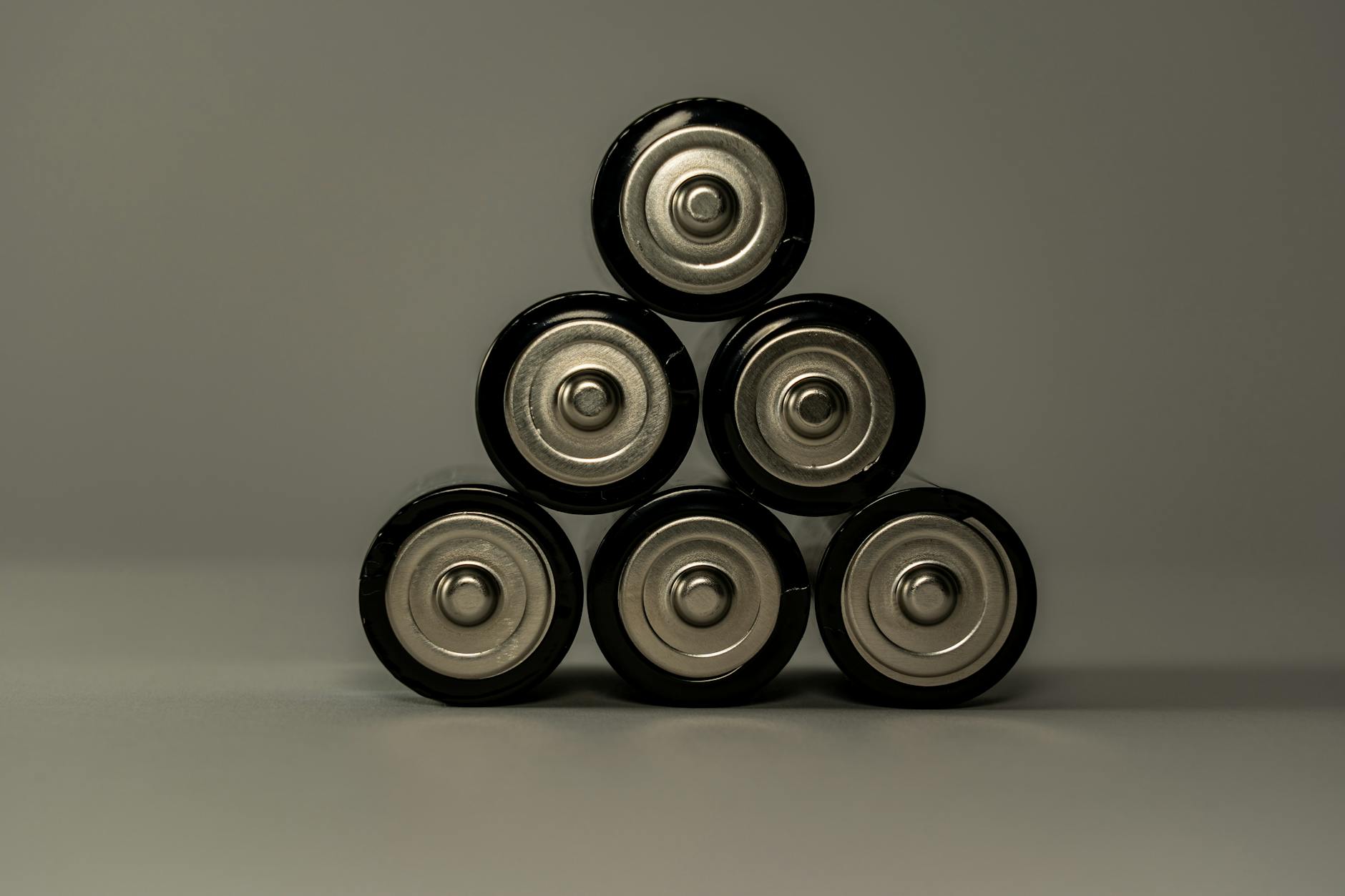
If you have ever bought a power bank that felt fine for a few months and then started dying halfway through a charge, there is a good chance the battery inside was never high quality to begin with. The battery cell is the single most important component in any power bank, and the difference between an A-grade cell and a cheap alternative goes far deeper than branding. Understanding what separates them helps you make a purchase decision you will not regret six months from now.
This article is part of our complete guide: Power Banks Best Prices.
A-Grade Battery Power Banks Kenya: What Makes an A-Grade Battery Different
Battery cells are not all manufactured equally, and the best way to understand this is to look at how they are graded before assembly. A-grade lithium cells are sourced from verified manufacturers and tested individually for capacity, internal resistance, and stability. Cheap power banks, on the other hand, frequently use recycled cells or substandard cells pulled from rejected batches, often with no traceability to their origin. You cannot tell the difference by looking at the casing, but your phone certainly notices over time. A-grade cells maintain a stable, consistent voltage output throughout a discharge cycle, which means your device charges efficiently rather than receiving erratic current. Cheap cells lose their ability to hold steady voltage quickly, especially under the stress of fast charging or powering a device with a large battery.
How A-Grade Power Banks Handle Kenya's Climate
Kenya's climate presents a real challenge for electronics, and heat is one of the fastest ways to destroy a lithium battery. A-grade cells use superior internal chemistry that resists thermal degradation, meaning they hold their capacity even when stored in a warm car, a bag left in the sun, or a shop with limited ventilation. Cheap batteries expand and swell in high ambient temperatures because their electrolyte breaks down faster under heat stress, leading to capacity loss and sometimes dangerous deformation. A-grade power banks also include thermal management circuits that monitor internal temperature and slow or pause charging when things get too warm. This is not a luxury feature; in a city like Nairobi, where temperatures climb and power banks often sit in pockets and backpacks for hours, it is essential. When you weigh a durable power bank vs cheap power bank options over two or three years in Kenyan conditions, the A-grade unit typically retains more than 80 percent of its original capacity while the cheap unit may be at 50 percent or less.
Charge Cycles: Why A-Grade Wins Long-Term
Every battery has a finite number of charge cycles before it begins to degrade noticeably, and this is where A-grade cells create a clear, measurable advantage. A properly manufactured A-grade cell handles between 500 and 1,000 full charge cycles before you see meaningful capacity loss, which translates to real years of dependable use. Cheap cells tend to show significant degradation after just 200 to 300 cycles, meaning the power bank that seemed like a bargain starts underperforming within a year. Consider that charging a power bank once daily adds up to roughly 365 cycles in a single year, so an A-grade unit comfortably covers two to three years of daily use before showing its age. Certifications like CE, FCC, and RoHS are not just stickers; they require battery cells to meet verified safety and cycle standards that cheap, uncertified products never face. These certifications give you a documented baseline of performance that is tested by an independent body, not just claimed by a seller.
Safety Features That Protect Your Devices
A power bank that damages your phone is worse than no power bank at all, and proper protection circuits are what stand between your device and real harm. A-grade power banks are built with multiple layers of protection including overcharge protection, over-discharge protection, and short-circuit protection, all working automatically in the background. Cheap power banks often skip these circuits entirely because they add cost, leaving your phone exposed to unregulated current that can quietly degrade its battery over dozens of charging sessions. A-grade multi-protection systems detect what device is connected and regulate the current output to match what that device can safely accept. This matters especially for newer phones with sensitive charging controllers, which can be permanently damaged by voltage spikes from an unregulated source. The protection circuits in a quality power bank also prevent over-discharge, which is the state where a battery drops so low it becomes chemically unstable and begins to fail. Choosing a power bank with verified multi-protection is one of the simplest ways to extend the lifespan of both the power bank and the phone it charges.
Real-World Cost Comparison Over Time
Price is usually the first thing people look at when buying a power bank, but the upfront number is rarely the full story. A cheap power bank might cost less at the point of sale, but when it fails after a year or eighteen months, you are back to buying another one. A-grade power banks carry a higher initial price, and they also come with a one-year warranty that gives you documented recourse if something goes wrong in the first twelve months of ownership. When you map out five years of ownership, the math almost always favours the quality unit: one purchase, one warranty period, and consistent performance across the entire period. Buying two or three cheap replacements over that same window costs more in total spend and more in time spent shopping, resetting, and dealing with a dead power bank at the worst possible moment. The frustration of a power bank that dies during a long journey or a power outage is worth factoring in alongside the cash cost. Framing it as a durable power bank vs cheap power bank decision makes the five-year cost clear in a way that the shelf price never does.
Signs Your Power Bank Uses Cheap Batteries
Knowing what to look for can save you from a bad purchase, or help you understand why the one you already own is letting you down. There are five warning signs that appear consistently across low-quality units, and each one points back to the cell grade and the presence or absence of proper protection circuits. Recognising these signs early means you can act before a failing unit causes damage to the device it is supposed to protect.
It Loses Capacity Quickly
If your power bank charged your phone twice when it was new and now barely manages one full charge after just a few months, the cells inside are almost certainly low grade. Real capacity loss this fast is a sign of poor cell quality and weak manufacturing tolerances. Sourcing A-grade battery power banks Kenya customers can rely on means looking for units where the rated capacity is backed by certification, not just printed on the packaging. A-grade cells should hold the majority of their stated capacity well into the second year of regular use. If yours is fading within months, the cells were never graded properly to begin with.
It Overheats During Normal Use
A power bank that gets uncomfortably warm during a standard charging session, not fast charging but ordinary use, is missing proper thermal management. This overheating accelerates internal degradation with every session and also puts excess heat into the device you are charging. Quality cells and proper protection circuits keep temperatures in a safe range even during extended charging. A power bank that runs hot in a Nairobi afternoon is not just uncomfortable to handle; it is shortening its own life with every charge.
It Cannot Deliver Its Advertised Capacity
A power bank labelled 20,000mAh that only charges a 4,000mAh phone three times is delivering about 12,000mAh in real use, which suggests the stated specification was inflated. Some gap is expected due to conversion loss, but a large gap points to cells that never met their rated capacity. Verified certifications give you confidence that the stated capacity reflects genuine, tested output rather than a marketing figure. If a seller cannot point to a certification mark, the capacity claim is essentially unverifiable.
It Swells or Deforms Physically
Physical swelling is one of the clearest signs that the battery cells inside have been pushed beyond their safe operating limits and the chemistry is breaking down. A swollen power bank should be stopped immediately and not charged further, as the condition can become hazardous. A-grade cells with proper protection circuits are designed specifically to avoid reaching the state where this occurs. Seeing this kind of deformation on a unit that is only months old is a direct result of low-grade cells with no thermal or charge management in place.
It Carries No Certification or Warranty
A power bank with no CE, FCC, or RoHS marking and no stated warranty period is a product that has not been held to any independent standard. The absence of a warranty is especially telling because it signals the manufacturer does not expect the product to last long enough to honour one. Any reputable seller of quality power banks will state the certification and warranty terms clearly before you hand over money. If those details are missing from the packaging and the seller cannot produce them on request, treat that as a firm reason to walk away.
The right power bank is one you stop thinking about, because it is there, working, every time you need it. Whether you are browsing our full range of power banks or visiting us at Mountain Mall on Thika Road in Nairobi, the most important thing you can do is check what is inside before you buy. A-grade cells, verified certifications, and a clear warranty are not premium extras; they are the baseline for a product worth owning.
See everything powerbanks.africa can do for you.
Visit powerbanks.africa →