A-Grade vs Low-Grade Power Bank Batteries: What You Need
Learn how to spot the difference between quality A-grade and low-grade power bank batteries to avoid counterfeits and protect your devices.
See everything powerbanks.africa can do for you.
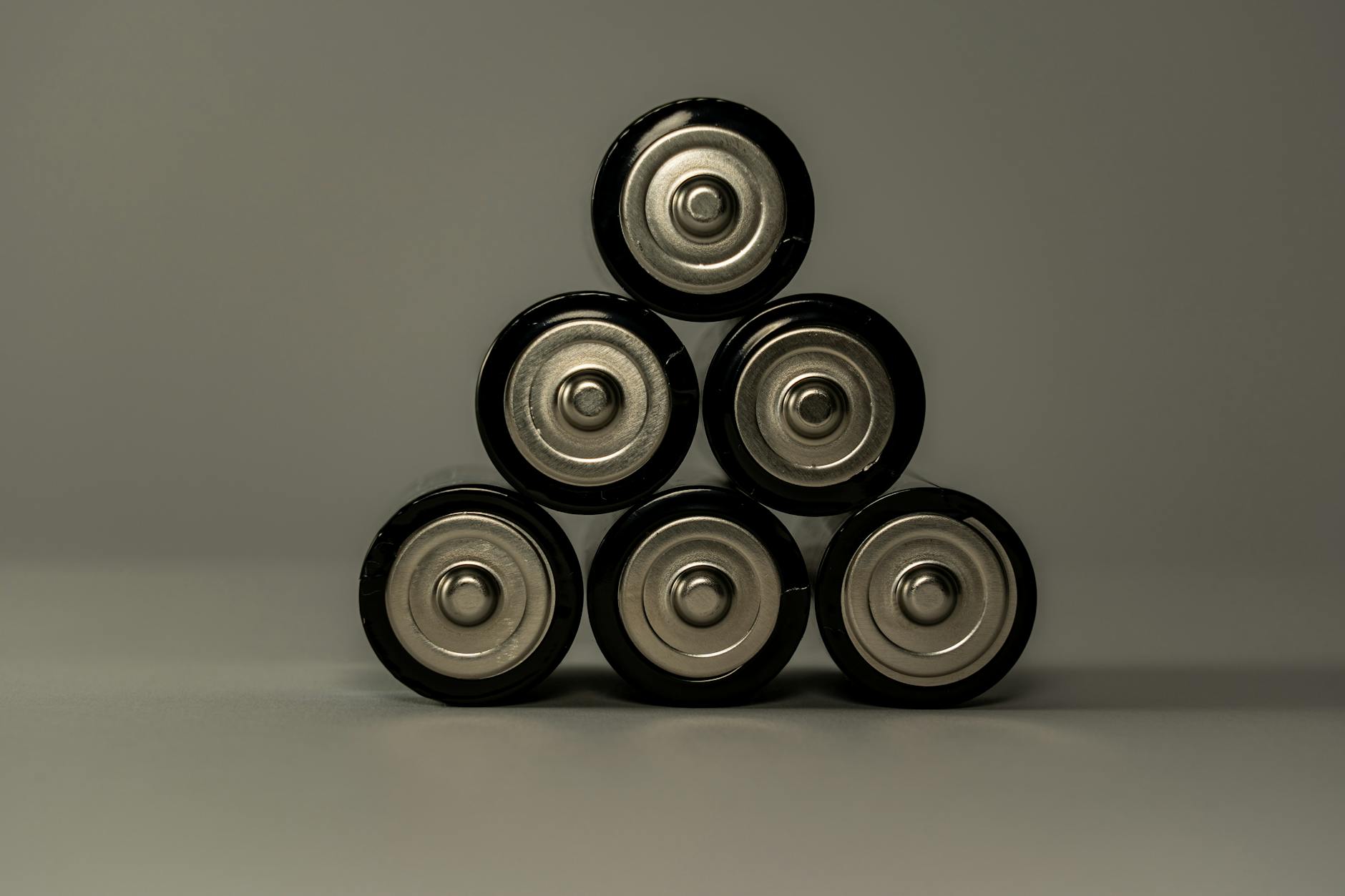
If you have ever bought a power bank that stopped working after a few months, or noticed your phone getting unusually warm during charging, the culprit was almost certainly the battery inside that power bank. The difference between an A-grade battery and a low-grade one is not just a technical detail for engineers. It affects how long your devices last, how safe your bag or desk is, and whether you get real value for your money.
This article is part of our complete guide: Power Banks Best Prices.
A-Grade Battery Power Bank Safety: What Makes a Battery A-Grade or Low-Grade
A-grade batteries are sourced from established manufacturers who follow strict quality control processes at every stage of production. These cells are manufactured using premium materials, including high-purity lithium compounds and precision-engineered separators that keep the battery stable. Low-grade batteries, by contrast, often use recycled or rejected cells that failed earlier quality checks at larger factories. Those cells end up in cheap power banks sold at attractive prices that rarely hold up in real use. The origin of the cell is the single biggest factor separating reliable power banks from dangerous ones.
A-grade cells go through independent testing and carry internationally recognized certifications before they reach the consumer. Certification processes check for consistent voltage output, thermal stability, and cycle durability under controlled conditions. Low-grade manufacturers skip this testing entirely because it adds cost and time they are not willing to spend. The result is a cell that may perform acceptably for a few weeks but has no verified baseline for safety or longevity. Without that testing, there is no reliable guarantee of what you are actually getting.
One of the clearest practical differences involves capacity retention over time. A-grade batteries are engineered to hold close to their rated capacity through hundreds of charge cycles, degrading slowly and predictably. Low-grade batteries often lose significant capacity within the first few months of use, sometimes dropping to half their rated output before the year is out. This happens because the cheap components inside cannot withstand repeated charge and discharge stress. Buying a low-grade power bank to save a few hundred shillings frequently means replacing it far sooner than you planned.
Safety Risks of Low-Grade Power Bank Batteries
Low-grade power banks typically lack the multi-protection circuits that prevent overheating, overcharging, and short circuits during normal use. A quality protection board monitors voltage, current, and temperature continuously and cuts the circuit when any reading goes outside a safe range. Without those protections, a low-grade battery can continue charging past its safe limit, generating heat that has nowhere to go. This is particularly dangerous when the power bank is left plugged in overnight or stored in a warm environment. A-grade battery power bank safety depends heavily on these built-in protection layers being present and functional.
Poor internal construction in low-grade cells can lead to battery swelling, and in serious cases, fire or explosion. Swelling happens when gases build up inside a cell that cannot manage its own chemical reactions properly. Once a cell begins to swell, the casing of the power bank can crack, and the risk of a thermal event increases sharply. Fires caused by low-grade lithium batteries have been documented in homes, vehicles, and on aircraft around the world. The physical consequences of that failure are not theoretical risks; they are outcomes that happen to real people every year.
Counterfeit and low-grade cells are often poorly shielded, meaning irregular voltage and current can feed directly into your phone during charging. A smartphone's charging circuit and motherboard are designed to work within specific electrical tolerances. When a low-grade power bank delivers inconsistent power, it stresses those components repeatedly, shortening the phone's battery life and potentially damaging the motherboard in ways that are expensive to repair. You may not notice the damage immediately, but you will notice it when your phone's battery starts dying faster than expected. Protecting a phone that costs tens of thousands of shillings with a substandard accessory is a costly false economy.
Low-grade batteries carry no CE, FCC, or RoHS certification because those certification processes would expose exactly the safety failures they are hiding. CE marking confirms compliance with European safety standards, FCC certification covers electromagnetic compatibility, and RoHS ensures the battery does not contain harmful substances like lead or mercury. These are not decorative logos; they represent real testing by independent bodies that manufacturers pay for and submit to voluntarily. A low-grade seller cannot pass those tests and so does not attempt them. If a power bank has no verifiable certification markings, you have no independent evidence that it is safe to use.
How to Identify Quality Power Bank Batteries
Knowing how to identify quality power bank batteries starts with looking for certification markings on both the device and its packaging. CE, FCC, and RoHS labels should be clearly printed, not stickered on loosely or written in fonts that look slightly off. Legitimate certification markings can often be cross-referenced with the manufacturer's documentation or the retailer's product listing. If a seller cannot show you any certification details when asked, that is a significant warning sign. Quality retailers have nothing to hide about the credentials of what they sell.
Brand reputation matters more than most people realize when choosing a power bank. A-grade power banks come from manufacturers with verifiable histories, consistent product lines, and public records of meeting safety standards across multiple markets. You can research a brand's presence in Kenya and internationally, check whether other retailers stock the same brand, and look for genuine customer reviews over time. A no-name brand with a single listing and no traceable manufacturer is almost always a red flag. Reputation is built over thousands of units sold and supported, not over one cheap product that looks good in a photo.
Build quality is something you can assess with your own hands before buying, especially at a physical store. A-grade power banks have solid casings with clean seams, even finishes, and professional labeling that includes accurate technical specifications. Low-grade knock-offs often have flexing panels, uneven joins, smudged printing, or specifications that do not quite add up when you check the math. Pick it up and press gently on the casing; a quality unit does not creak or flex. Those physical details reflect the same discipline, or lack of it, that went into building the battery inside.
Testing performance against stated specifications is another reliable method. A genuine A-grade battery rated at 50000mAh should consistently deliver the charging cycles its specifications promise, not just on the first use but after dozens of cycles. Ask the retailer about charge cycle ratings and capacity retention figures; a good retailer will know the answers. Low-grade power banks frequently cannot maintain their stated output even from day one, delivering far fewer charges per cycle than the label claims. That gap between the marketing and the reality is one of the clearest signals that the battery inside is not what it claims to be.
Finally, check the warranty terms before you hand over any money. A-grade manufacturers offer one-year warranties because their engineering and quality control give them confidence that the product will perform. A low-grade seller avoids warranties because they know the product is unlikely to last and they do not want the liability of replacements. A clear, written, one-year warranty from a retailer with a physical address you can actually visit is a meaningful signal of quality. If there is no warranty or it is buried in vague language, walk away.
Real-World Performance Differences
A genuine high-capacity A-grade 50000mAh power bank will reliably charge a standard smartphone between ten and fifteen times before it needs recharging. A low-grade unit claiming the same capacity will often deliver only three to five full charges, because the actual usable capacity is far below what is printed on the label. This matters enormously on a long road trip, during a power cut, or at a multi-day outdoor event where access to mains electricity is limited. You buy a 50000mAh power bank because you need 50000mAh of usable power. A low-grade battery that cannot deliver that is not a bargain; it is a misrepresentation.
Heat is one of the most telling indicators of internal battery quality during use. A-grade power banks stay close to ambient temperature during normal charging and discharging, because their cells and protection circuits are managing electrical resistance efficiently. Low-grade batteries heat up quickly and significantly, which indicates high internal resistance and the kind of energy loss that both wastes your charge and creates a safety hazard. In Kenya's climate, where temperatures in Nairobi can climb well above 30 degrees Celsius during the day, that additional heat from a low-grade battery compounds an already warm environment. Overheating accelerates cell degradation and increases the risk of the safety failures described earlier.
Cycle durability is where A-grade engineering really shows its value over time. A-grade batteries are designed to retain around 80 percent of their original capacity after 300 or more charge cycles, meaning the power bank remains genuinely useful for two or three years of regular use. Low-grade cells can drop to 50 percent capacity within 50 to 100 cycles, making them essentially unreliable within months of purchase. Three hundred cycles of daily use is roughly one year of charging your phone every day from the power bank. That kind of longevity is only possible when the cell chemistry, materials, and protection circuits are all working together correctly.
Power banks with built-in cables illustrate the performance gap especially clearly. A-grade built-in cables are constructed with quality connectors and sufficient gauge wiring to handle repeated flexing and high current without degrading. Low-grade cables fail at the connector joint within weeks because the solder connections are weak and the cable jacket cracks under repeated bending. A good built-in cable should last as long as the power bank itself, not become the reason you cannot use it after a month. When a built-in cable fails on a low-grade unit, the whole device often becomes useless because the cable is not replaceable.
Why A-Grade Batteries Cost More and Why It Matters
The higher price of an A-grade power bank reflects real costs that went into making it safe and reliable. Rigorous testing, quality materials, certified components, and the overhead of maintaining manufacturing standards all add legitimate cost before the product even reaches a retailer. Those costs do not disappear with a low-grade product; they are simply transferred to the buyer in the form of early failure, device damage, or safety incidents. Understanding what you are actually paying for makes the price difference easier to evaluate honestly. You are not paying extra for a logo; you are paying for verified performance and protection.
Certified safety features including thermal sensors, voltage regulators, and short-circuit protection add measurable engineering value to an A-grade power bank. These components are not optional extras; they are the mechanisms that prevent the failures described earlier in this post. A thermal sensor that cuts the circuit at a critical temperature is worth more than its cost in components every single time it prevents an incident. Voltage regulators ensure your devices receive stable, clean power that does not stress their charging circuits. Short-circuit protection means a pinched cable or a faulty connector does not become an electrical hazard.
Kenya's climate creates specific conditions that make battery quality even more important than it might be in cooler parts of the world. The combination of warm ambient temperatures and direct sunlight in a hot car or on a market stall pushes any battery closer to its thermal limits. A-grade batteries are tested and rated for performance across a range of temperatures, giving them a meaningful safety margin in those conditions. Low-grade batteries have no verified thermal ceiling, so they are operating at unknown risk levels even before the environment adds additional stress. Choosing quality is not a luxury in this context; it is a practical response to real conditions.
The long-term financial case for A-grade batteries is straightforward. One quality power bank that lasts three years costs less in total than replacing two or three cheap ones over the same period, especially when you factor in any device damage caused by low-grade charging. Protecting a smartphone worth 50,000 shillings or more with a certified, reliable power bank is simply good financial sense. The upfront saving on a low-grade unit disappears fast when you calculate what it costs you in replacements and repairs.
Where to Find A-Grade Power Banks in Kenya
Buying from a retailer with a real physical location and warranty backing is the most reliable way to ensure you are getting what you pay for. powerbanks.africa stocks CE, FCC, and RoHS-certified power banks at Mountain Mall on Thika Road in Nairobi, where you can physically inspect the product, check the certifications, and ask questions before you buy. Having a physical address means there is accountability behind every sale, not just an anonymous online listing that disappears if something goes wrong. Nationwide delivery means customers outside Nairobi can access the same quality without having to travel. That combination of physical presence and delivery reach is rare and worth prioritizing.
Look specifically for stores that display certification information openly, either on the product page, on the packaging, or on request from staff. A retailer that is confident in what they sell will have no hesitation sharing certification details. One-year warranty terms, clearly stated and honored, are another filter that helps separate serious retailers from those moving stock without accountability. If a store cannot tell you what certifications their power banks carry or what the warranty covers, that silence is informative. Quality products come with quality information.
Be cautious of prices that sit well below the market average for similar specifications, particularly on informal online platforms. A genuine 50000mAh A-grade power bank with multi-protection features, built-in cables, and a one-year warranty has a real cost floor below which it simply cannot be made profitably. If a listing undercuts that by a significant margin, the difference is coming from somewhere, and that somewhere is almost always the battery quality or the safety features. Verifying specifications and certifications with the seller before purchase protects you from making an expensive mistake. Our product range is clearly specified so you always know exactly what you are buying before you commit.
The best approach, whether you are buying in person at Mountain Mall or ordering for delivery anywhere in Kenya, is to treat certification, warranty, and physical build quality as non-negotiable rather than optional extras. Ask questions, read specifications, and choose retailers who can answer your questions with confidence and documentation.
Choosing an A-grade power bank over a cheap alternative is one of those decisions that pays you back every single day in reliable performance, device protection, and genuine peace of mind. The difference in price is real, but so is the difference in what you actually get, and in what you avoid.
See everything powerbanks.africa can do for you.
Visit powerbanks.africa →