Built-in Cable Power Banks: Do They Really Last?
Learn why integrated cables fail and how to choose a built-in cable power bank that actually survives daily use in Kenya.
See everything powerbanks.africa can do for you.
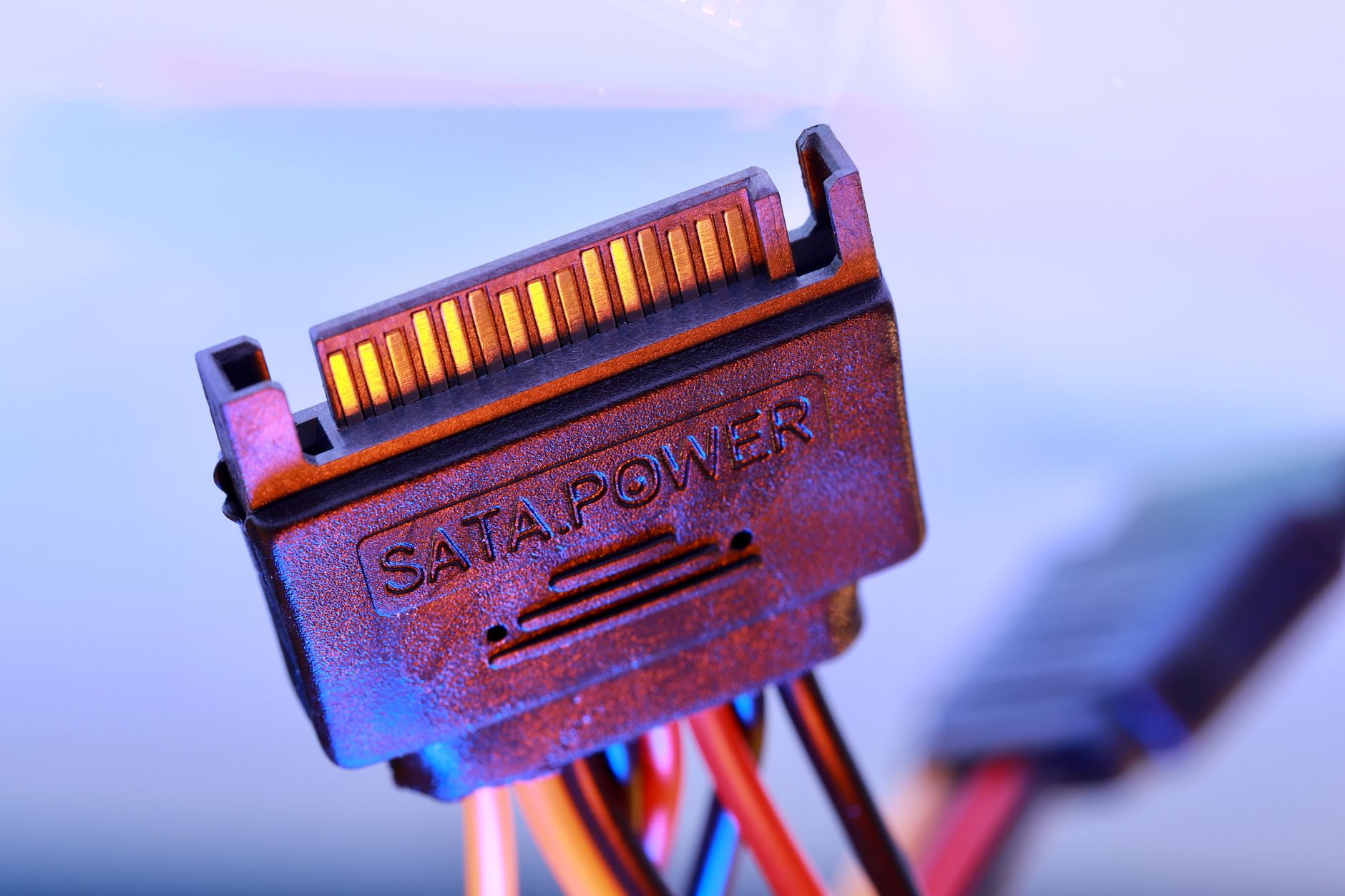
If you have ever watched a built-in cable power bank go from trusty daily companion to a dead block of plastic in under a year, you already know the frustration. The idea is genuinely useful: one device, no tangled cables to hunt for, always ready in your bag. But durability is the real question, and the answer depends almost entirely on how the power bank was engineered from the inside out. Here is an honest look at what makes integrated cable power banks fail, what makes them last, and how to choose one that will actually go the distance in Kenya.
This article is part of our complete guide: Power Banks Best Prices.
Power Bank With Built-In Cable Durability: Why Built-in Cables Fail Faster Than You'd Think
The spot where the cable meets the power bank body is the single most dangerous point in the whole device. Every time you pick up the unit, angle it to reach your phone, or shift it in your bag, that junction bends slightly. Over hundreds of cycles, that repeated stress cracks the outer insulation and eventually breaks the internal wire strands before anything else does. Most manufacturers reinforce the outer casing, but skip proper strain relief at this exact point because it adds cost.
Beneath the surface, the solder joints that connect the cable to the circuit board are more vulnerable than most people realise. Solder is a relatively brittle material, and micro-vibrations from daily carry crack these connections at the microscopic level long before you notice any visible damage. You might first see intermittent charging, where the cable works if you hold it at a specific angle, which is a classic sign of a failing solder joint. External connectors can be reseated or replaced, but an internal solder failure usually means the unit is finished.
Heat buildup inside the power bank body is another slow killer that specifically targets the cable's insulation. Lithium batteries generate heat during charging, and in a sealed casing that heat has nowhere to go quickly. Cable insulation softens, hardens, and eventually cracks when it is repeatedly heated and cooled over months of daily use. A quality power bank with built-in cable durability in mind will use heat-resistant wiring and thermal management features to slow this process significantly.
The Weak Link: Connector Quality Matters More Than Cable Length
The connector at the end of a built-in cable takes more punishment than almost any other component in the device. Budget power banks typically use thin, brittle connector housings made from low-grade plastics, and these begin cracking after 200 to 300 charge cycles under normal use. That can mean failure in as little as four months if you are charging a device twice a day. The cable length is almost irrelevant if the connector itself collapses that quickly.
Connectors built to A-grade standards are tested to withstand 5,000 or more insertion cycles without mechanical failure. That is roughly 13 years of daily charging at one cycle per day, which puts genuine quality in perspective. When a manufacturer commits to this specification, the connector housing is thicker, the locking mechanism more precise, and the internal contacts more securely bonded. The difference in material cost is modest, but the difference in real-world lifespan is enormous.
USB-C built-in connectors generally outlast Lightning built-ins because of connector geometry. USB-C is symmetrical and has a more robust internal pin structure, which distributes insertion stress more evenly across the contact array. Lightning connectors, while thin and convenient, have a narrower tolerance for repeated flexing of the tiny internal pins. Gold-plated contacts on either type resist the oxidation that causes resistance to build up over time, keeping conductivity stable well into the connector's second or third year of use.
Real-World Durability: What Kenya's Daily Use Demands
Power cuts in Nairobi and across the country mean many people run through two or three full charge cycles per day on their power bank. That frequency is significantly higher than the one-cycle-per-day assumption most global durability ratings are based on. A power bank with built-in cable durability designed for this kind of heavy rotation needs connectors and internal wiring rated for sustained high-cycle use, not just occasional top-ups. If the spec sheet does not address cycle rating, assume it was tested under light conditions.
Carrying a power bank in a bag or pocket adds mechanical stress that stationary charging never produces. Every jostle, every time the unit shifts against your keys or headphones, creates tiny flexing forces at the cable attachment point. These micro-stresses accumulate quietly and accelerate connector fatigue in ways that are almost impossible to detect until the cable stops working. A rigid, well-seated connector housing that does not allow the cable to wobble at its base is the most practical defence against this kind of wear.
Kenya's coastal and inland humidity, combined with the red dust common in drier regions, attacks cable insulation and internal solder joints from the outside in. Moisture seeps into micro-cracks in the cable sheath and accelerates oxidation on the connector contacts. Dust particles work into connector housings and act as abrasives over time. Power banks with sealed designs and moisture barriers at the cable entry point hold up significantly better in these everyday Kenyan conditions than open, unsealed alternatives.
Counterfeit and low-cost power banks frequently cut corners on internal cable gauge, using thinner wire than the stated capacity demands. A thin wire carrying high current heats up far more than a properly gauged wire, which degrades insulation and solder joints in a fraction of the expected time. These units often work fine for the first month and then deteriorate sharply, with most failing completely within three to six months of regular use. The price saving at the point of purchase rarely compensates for the replacement cost and the inconvenience.
Built-in vs. Separate Cable: When Integrated Makes Sense
The strongest argument for a built-in cable is simple convenience: you always have what you need and nothing extra to lose. No digging through your bag for a cable that may or may not be there, no borrowing from colleagues, no arriving somewhere with a dead phone because you forgot the cable at home. For people who travel regularly between Nairobi and upcountry or commute long distances, this reduction in friction is genuinely valuable and not just a marketing point.
The trade-off is real, though. If the integrated cable fails, you often cannot use the power bank at all without a repair that most service centres cannot or will not perform on a sealed unit. With a separate cable, you simply swap to a new one for a few hundred shillings and keep going. The integrated cable vs separate cable reliability debate often comes down to this single risk: how much does it cost you if the cable is the thing that breaks first?
Separate cables give you flexibility that built-in cables cannot match. You can use a longer cable when your phone sits across the table, or a short one when you want everything close together. You can replace only the cable if it frays, rather than the entire power bank. For people who already carry organised cable pouches and rarely lose accessories, the convenience argument for built-in cables is weaker, and the reliability argument for separate cables becomes the stronger consideration.
Built-in cables justify their convenience only when the connector is rated for 5,000 or more cycles and the unit carries a warranty that explicitly covers the cable and connector. Anything less, and you are essentially accepting that the cable will become the failure point and that the entire unit may need replacing when it does. A solid one-year warranty with clear cable coverage is the minimum assurance you should accept before committing to an integrated cable design.
How to Spot a Durable Built-in Cable Power Bank
CE, FCC, and RoHS certifications are the clearest indicators that a power bank has been through independent testing rather than just manufacturer self-reporting. CE certification specifically requires that cables and connectors meet defined mechanical stress and insulation standards, not just that the battery passes a capacity test. FCC compliance covers electromagnetic performance, and RoHS restricts hazardous materials that degrade faster over time. Together, these three mark out a baseline of build quality that filters out the majority of counterfeit and substandard products.
A-grade battery backing from a verified manufacturer signals that the internal components, including the wiring and solder work, meet a higher standard than budget alternatives. Manufacturers who source A-grade cells are usually applying the same procurement discipline to other internal parts because the same quality control processes govern the whole assembly. Look for this specification clearly stated in the product description, not buried in small print or absent entirely. Our 50000mAh LED light power banks are built around A-grade cells precisely because the battery quality sets the standard for everything connected to it.
Multi-protection features including overcharge protection, short-circuit cutoff, and temperature control directly protect the integrated cable from the heat damage described earlier. When the power bank automatically reduces current or shuts off when temperatures rise, the cable insulation and solder joints are exposed to far less thermal stress over their lifetime. These features are not just battery protection; they extend the usable life of every internal component, including the cable. A power bank without them is running its integrated cable in worse conditions every single day.
A one-year warranty that explicitly covers the cable connector is non-negotiable for built-in cable power banks. Some warranties cover the battery but exclude the cable on the grounds that it is a wear item, which defeats the purpose when the cable is the component most likely to fail first. Read the warranty terms carefully before purchasing, not after. User reviews written six to twelve months after purchase are also an honest source of information about real-world cable durability, often more useful than any specification on the packaging.
Extending Your Built-in Cable Power Bank's Life
How you store and handle a built-in cable power bank has a direct and measurable impact on how long the cable lasts. Store the unit with the cable lying relaxed rather than coiled tightly back on itself, because a tight coil maintains constant bend stress at the base and along the length of the cable simultaneously. A small cloth pouch or padded sleeve keeps the cable from being pinched by other items in your bag. These habits cost nothing and can add months to the cable's functional life.
Heat is the second-biggest threat after mechanical stress, and it is one you can actively manage. Avoid leaving the power bank on a car dashboard, in direct sunlight, or in a sealed bag in a hot matatu for extended periods. Charging in a cool, ventilated spot reduces the temperature the cable insulation reaches during each cycle. Given how much heat lithium batteries already generate internally, reducing external heat sources keeps the overall thermal load within the range the cable insulation was designed for.
Disconnecting the cable immediately after your phone reaches full charge sounds like a small thing, but it removes one consistent source of micro-stress from the connector joint. Leaving the cable plugged in while the phone is full means the cable hangs under its own weight for hours at a time, pulling gently on the connector housing with every movement. Choosing a power bank with multi-protection features that regulate temperature and prevent overcharging also ensures the unit is not working harder than it needs to during every session, which benefits both the battery and the cable over the long term.
The durability of a built-in cable power bank is not a lottery. It follows directly from the quality of the materials, the certifications the manufacturer is willing to stand behind, and the habits of the person using it. Choose a unit with proven connector ratings, proper certifications, and a warranty that covers the whole device, treat it with a little care, and a built-in cable power bank can be one of the most reliable pieces of kit you carry every day across Kenya.
See everything powerbanks.africa can do for you.
Visit powerbanks.africa →