Why Your Phone Dies in Nairobi Traffic: A Capacity Guide
Learn why your phone battery drains faster during Nairobi commutes and find the right power bank capacity to stay connected all day.
See everything powerbanks.africa can do for you.
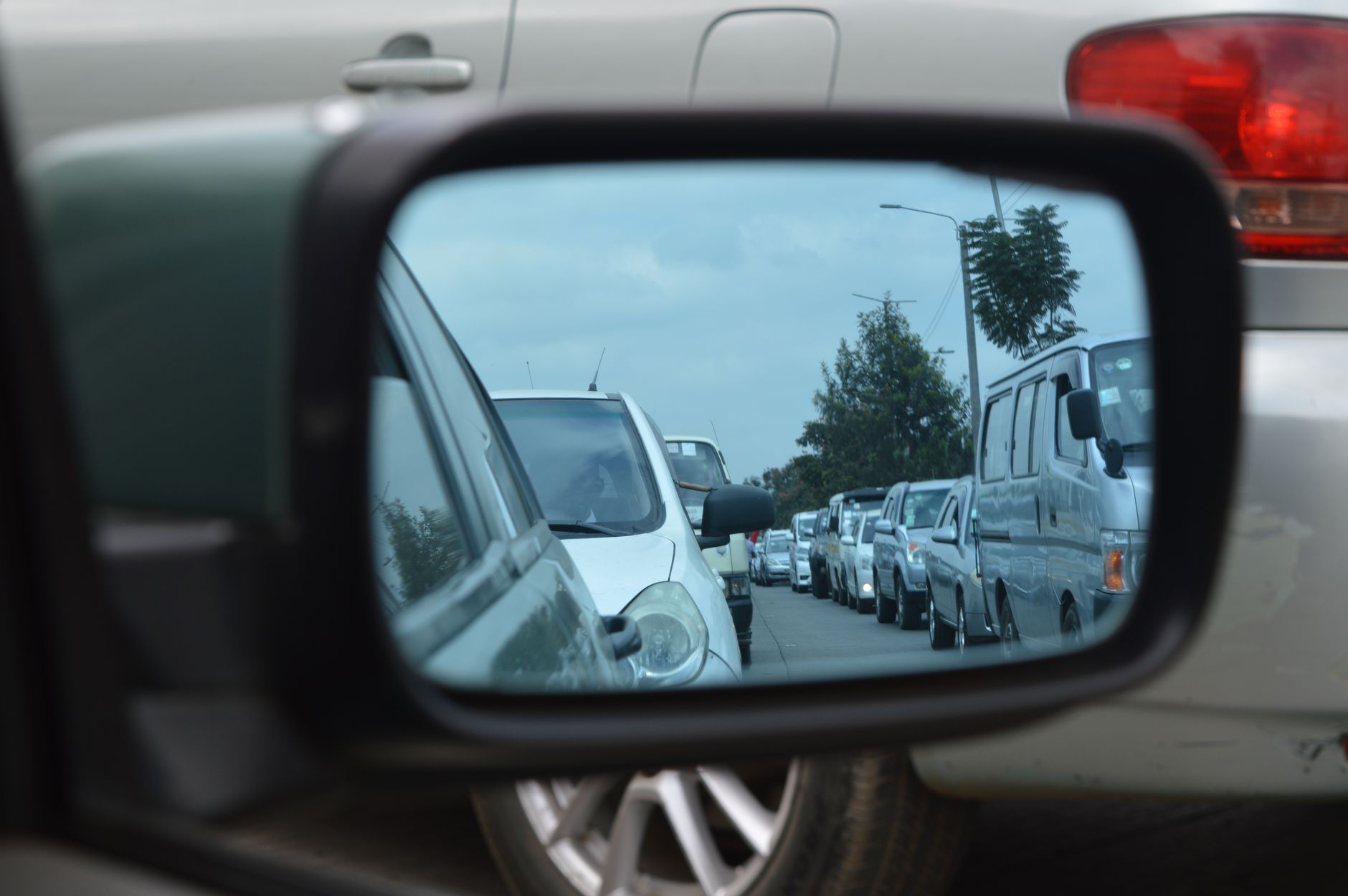
If you commute in Nairobi, you already know the feeling: you leave the house at seven in the morning with a full battery, and by the time you crawl past Mlolongo or the Westlands roundabout, your phone is begging for a charger. It is not your imagination, and it is not a faulty phone. Nairobi's traffic conditions create a specific set of demands on your battery that most people never account for. Understanding what drains your phone and how to choose the right backup power will make your commute genuinely less stressful.
This article is part of our complete guide: Power Banks Best Prices.
Best Power Bank Capacity For Daily Use: Why Nairobi Traffic Drains Your Battery Faster
Navigation apps like Google Maps and Waze are the first culprits. When you are sitting in the Mombasa Road gridlock or threading through the Ngong Road diversions, GPS locks your phone's processor and screen into a continuous high-demand state. The app refreshes your route every few seconds, burns mobile data, and keeps the screen lit the entire time. That combination alone can drain a modern phone at roughly ten to fifteen percent per hour, before you even open another app. For a commute lasting ninety minutes each way, that adds up to a significant chunk of your daily battery.
Network switching makes things worse in ways most commuters never consider. As your matatu or car moves from Roysambu toward town, your phone jumps between cell towers, and each handoff requires extra radio power to re-establish a signal. In areas like Thika Road near the Kasarani interchange, where congestion forces very slow movement through multiple coverage zones, your phone's modem works harder than it would sitting still. This background activity is invisible but constant, and it adds steady drain on top of whatever you are already doing on screen.
Bright sunlight is another factor specific to Nairobi's climate. Your phone's ambient light sensor detects the strong equatorial sun and automatically raises screen brightness to keep the display readable. A screen running at eighty or ninety percent brightness uses significantly more power than one at fifty percent, and since you cannot easily shade your phone in a moving vehicle, that elevated draw runs for the full commute. Many people do not realise that daylight driving conditions alone can increase screen power consumption by thirty percent or more compared to indoor use.
Finally, traffic jams are social time. Scrolling through Twitter, replying on WhatsApp groups, watching a quick YouTube clip at a standstill: these activities feel harmless individually but stack on top of everything else your phone is already doing. Social media apps refresh feeds in the background, load images and video thumbnails, and maintain persistent network connections. By the time you reach your destination, your phone has been running GPS, switching networks, fighting daylight with a bright screen, and serving your social feed all at once, which is why the battery is already critical before lunchtime.
Understanding mAh and Real-World Usage
The number printed on every power bank, whether it is 10000 or 50000, is measured in milliampere-hours, and it tells you how much electrical energy the battery stores. It does not tell you exactly how many times you can charge your phone, and many buyers are disappointed when the maths does not work out the way they expected. Understanding why helps you pick the right size the first time. The stored energy in a power bank has to travel through charging circuits, cables, and your phone's own charging controller before it reaches the phone battery, and that journey has a cost.
Energy conversion losses are unavoidable in any electronic system. When a power bank transfers energy to your phone, roughly twenty to thirty percent is lost as heat in the charging circuit, the cable, and the phone's battery management system. So a 20000mAh power bank does not deliver 20000mAh to your phone; it delivers closer to 14000 to 16000mAh under real conditions. This is a physics reality, not a sign of a low-quality product, though a well-built power bank with good circuitry does minimise those losses compared to a poorly made one.
Your phone's battery size also determines how many charges you actually get. A Samsung Galaxy A55 carries a 5000mAh battery, a budget Tecno or Itel model might have 4000mAh, and some older iPhones have batteries closer to 3000mAh. Dividing a power bank's real-world output by your phone's battery size gives you a realistic charge count. A 20000mAh power bank, accounting for conversion losses, will give you roughly two full charges on a 5000mAh phone or closer to three on a 3000mAh device. Knowing your phone's battery size before you shop is the single most practical thing you can do.
The question of how many mAh do I need for a power bank is really a question about how long you are away from a wall socket on a typical day. If you recharge your phone once during the day at the office, your needs are different from someone who works in the field all day in Kiambu or drives between sites in Mombasa. A rough personal calculation, based on your phone's battery size and how many top-ups you need between charges, is more useful than any generic recommendation. The sections below give you concrete starting points for the most common Nairobi commuter profiles.
Power Bank Capacity for Nairobi Commuters
A 10000mAh to 15000mAh power bank suits commuters who spend less than two hours in the car or matatu each day and have reliable access to a wall socket at work or school. It will top your phone up from twenty percent to full once, with a little extra to spare. These banks are lighter and easier to carry in a small bag, which makes them popular with students and office workers on relatively predictable schedules. If your commute is Ruaka to Westlands and back, this range is likely enough.
A 20000mAh power bank is the practical all-day solution for the regular Nairobi commuter spending one to two hours on the road each way. It covers a full charge at lunchtime and still has enough left to keep you topped up during the evening crawl home. This capacity hits the sweet spot between portability and endurance for most people in Nairobi, which is why it is consistently the most popular choice. If you are looking for the best power bank capacity for daily use and you commute on Thika Road, Langata Road, or the Eastern Bypass, 20000mAh is the size to start with.
The 50000mAh LED light power bank is in a different category entirely, designed for users with more demanding situations. Frequent travellers, field officers, drivers doing long hauls to Mombasa or Kisumu, and households dealing with regular Kenya Power outages all benefit from this level of capacity. At that size, you can charge a phone multiple times over several days without access to any mains power. The built-in LED light feature adds genuine utility during Nairobi's evening rush hours, particularly in areas where street lighting is inconsistent, giving you a hands-free light source without needing to carry a separate torch.
How to Choose Based on Your Commute Pattern
Start by observing your actual screen-on time during a typical commute rather than guessing. Most Android phones show screen-on time in the battery settings, and iOS shows it in Screen Time. Check how much your battery drops during a single commute and multiply that by two for the full day. That gives you a concrete number to work backwards from, rather than an estimate based on how busy you feel. Many Nairobi commuters discover they are using considerably more battery than they assumed once they check the data.
Think honestly about what you do on your phone while travelling. Someone using Google Maps continuously and streaming music or podcasts is drawing far more power than someone who only checks WhatsApp messages at red lights. Streaming video, even at low quality, is particularly demanding because it combines cellular data, screen brightness, and processor load simultaneously. Matching your capacity choice to your actual usage pattern, rather than the heaviest possible scenario, helps you avoid buying more bank than you need.
Consider your access to charging points during the day. An office worker in Upperhill with a power socket at their desk needs a power bank mainly for the commute, while a delivery rider or sales representative working across Nairobi without a fixed desk needs a bank that can last the full working day independently. If your workplace charges your phone reliably, a 10000mAh to 15000mAh bank handles the commute top-up role well. If the power bank is your only source of charging from six in the morning to eight at night, you need at least 20000mAh and possibly more.
Factor in Kenya's power interruptions when sizing your purchase, especially if you live in areas that experience scheduled or unplanned outages. A power bank that is large enough to charge your phone twice also serves as a home backup during a two-hour KPLC outage, keeping you connected for work calls or emergencies. For households where outages are frequent, the 50000mAh option doubles as a practical emergency power solution rather than just a commuter accessory. This dual-purpose value makes the larger capacity more cost-effective than it first appears.
Quality Features That Matter on Kenya's Roads
Nairobi sits at 1600 metres above sea level, but the inside of a parked car facing the equatorial sun can reach temperatures that degrade low-quality battery cells within months. A-grade batteries, which use higher-purity lithium cells manufactured to tighter tolerances, retain their capacity far better under heat stress than the recycled or B-grade cells found in cheaper alternatives. This difference is not visible from the outside of the product, which is why certification and sourcing matter so much. A power bank that loses thirty percent of its stated capacity within six months of Nairobi use is not a bargain at any price.
Multi-protection circuitry guards against overcharging, over-discharging, short circuits, and excessive current draw, which are the most common failure modes during intensive daily use. When you leave a power bank charging your phone overnight or run it down completely during a long commute, that protection circuitry is what prevents cell damage and maintains safety. Cheap power banks often omit some of these protections to cut manufacturing costs, and the result is either premature battery failure or, in rare cases, a genuine safety hazard. Reliable multi-protection is not a premium feature; it is a baseline requirement for a product you carry against your body every day.
Built-in cables solve one of the most frustrating small problems of the daily commute. Searching through a bag for a USB-C or Lightning cable while in a moving vehicle, or discovering you left your cable at home, wastes time and introduces the extra failure point of a cable going missing or breaking. A power bank with built-in cables for both USB-C and micro-USB means you are always ready to charge regardless of which device you have with you. For commuters juggling a personal phone, a work phone, and wireless earbuds, having the cables already attached is a practical convenience that adds up over hundreds of daily uses.
CE, FCC, and RoHS certification are not just stickers on a box. CE and FCC marks indicate the product has been tested for electromagnetic compatibility and electrical safety standards used in Europe and the United States respectively, and RoHS certification confirms the absence of restricted hazardous substances in the battery and circuit materials. These certifications require third-party testing, which means a manufacturer has invested in a proper production process rather than cutting corners. When you are charging your phone for hours on end during a Nairobi commute, knowing the product has passed independent safety testing is concrete reassurance, not marketing language.
Getting the Most From Your Power Bank Daily
Enabling low-power mode on your phone before the battery drops below twenty percent protects both your phone battery and extends the time before you need to draw from your power bank. Low-power mode reduces background app refresh, lowers screen brightness automatically, and scales back processor performance for tasks that do not need full speed. On an iPhone or Android device, you can set it to activate automatically at a certain threshold rather than remembering to enable it manually. Starting it at twenty percent rather than five percent means you preserve enough charge to handle urgent calls or navigation even if your power bank is not immediately within reach.
Charging your power bank overnight is one of the smallest habits with the biggest daily payoff. A power bank that sits at forty percent because you forgot to charge it the night before is a common source of commuter frustration, particularly on mornings when meetings start early or traffic is unpredictable. Plugging in your power bank at the same time as your phone before bed takes ten seconds and means you leave the house with both devices at full capacity. Treating the power bank as part of your nightly charging routine rather than an afterthought eliminates one variable from an already unpredictable Nairobi morning.
Keeping your phone screen at moderate brightness during traffic jams is the single most effective way to slow battery drain without affecting your ability to use the phone. Manually setting brightness to around fifty percent, rather than leaving it on automatic, reduces screen power draw noticeably over a ninety-minute commute. Combining moderate brightness with disabling background app refresh for apps you are not actively using can stretch your battery by an additional twenty to thirty minutes, which on a bad Nairobi traffic day can be the difference between arriving at the office with power or not. Small adjustments compound quickly when you make them consistently.
The one-year warranty on a quality power bank is particularly valuable for daily commuters because battery cells do experience gradual capacity degradation under regular use. A power bank charged and discharged every weekday goes through roughly 260 charge cycles per year, which is within the normal lifespan of a good lithium battery cell but does produce measurable wear. A warranty that covers battery degradation from that kind of daily Nairobi use means you have a clear path to a replacement or repair if performance drops significantly within the first year. Buying a power bank from a seller who stands behind that warranty with a physical location you can visit, rather than an anonymous online listing, makes the warranty a real benefit rather than a theoretical one.
Picking the right power bank for your Nairobi commute comes down to honest self-assessment: how long you are on the road, what you do on your phone while travelling, and whether you have other charging options during the day. Once you know those three things, the capacity choice is straightforward. If you would like to see the full range of options, browse our power banks or visit us in person at Mountain Mall on Thika Road, where you can ask questions and see the products before you buy.
See everything powerbanks.africa can do for you.
Visit powerbanks.africa →