Power Bank Battery Health: Why Capacity Fades and How to Extend It
Lithium-ion battery capacity fades naturally over charge cycles, accelerated by heat, deep discharges, and poor charging practices. Extend your power bank's life by avoiding overcharging, storing at 40-80% charge in cool conditions, using quality chargers, and choosing A-grade batteries. Durable power banks in Nairobi withstand Kenya's heat better when properly maintained.
See everything powerbanks.africa can do for you.
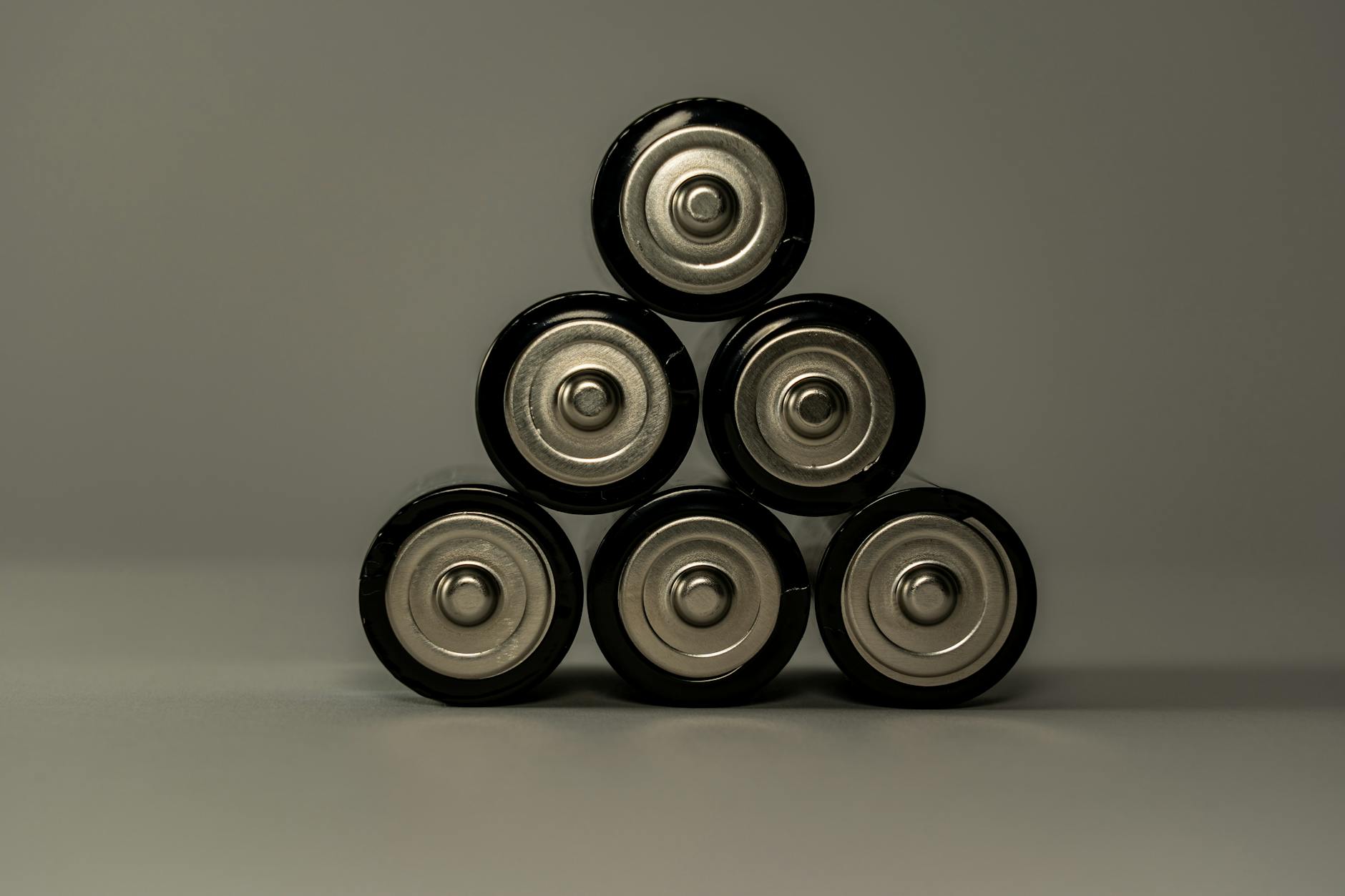
If you have ever noticed your power bank charging your phone fewer times than it used to, you are not imagining things. Battery capacity fade is a real and predictable process, and understanding why it happens puts you in a much better position to slow it down. This guide walks through the science behind degradation, the habits that speed it up, and the practical steps that genuinely help your power bank last longer.
This article is part of our complete guide: Power Banks Best Prices.
How Power Bank Batteries Degrade Over Time
Lithium-ion batteries age with every charge cycle they complete. A charge cycle is one full discharge and recharge, and most quality cells are rated for somewhere between 300 and 500 cycles before noticeable capacity loss sets in. Over time, the lithium ions that shuttle back and forth between the battery's electrodes begin to get trapped, and fewer ions means less stored energy. This is a natural electrochemical process, not a defect, though manufacturing quality has a large influence on how quickly it progresses.
Heat is one of the biggest enemies of a lithium-ion cell. When temperatures inside the battery rise above roughly 40 degrees Celsius, the chemical reactions that degrade the electrodes speed up considerably. A power bank left in a hot matatu, on a sunny windowsill, or in a car parked in the Nairobi afternoon heat can age weeks' worth in a single afternoon. Even heat generated during charging adds up if the device has no way to manage its temperature effectively.
The depth of each discharge cycle also matters more than most people realise. Running a battery completely flat and then charging it back to 100 percent creates far more internal stress than keeping it in the 20 to 80 percent range. Deep discharge forces the cell chemistry to work at its limits both at the bottom and the top of the cycle. Keeping your power bank topped up partially, rather than draining it entirely before recharging, is one of the most effective things you can do to preserve its usable life.
Manufacturing quality is perhaps the factor that separates a power bank that still works well after two years from one that feels half-dead after six months. A-grade battery cells are manufactured with tighter tolerances, which means each cell in a multi-cell pack holds charge more consistently and degrades more evenly. Lower-grade cells vary widely in internal resistance from the start, and that inconsistency creates weak links that fail faster. Choosing a power bank built with A-grade cells is not a marketing detail; it is the single biggest predictor of long-term performance.
Why Your Power Bank Loses Capacity Faster Than Expected
Leaving your power bank plugged in overnight, night after night, is one of the most common ways people unknowingly damage their battery. Once a lithium-ion cell reaches 100 percent, continued charging keeps it in a high-voltage stressed state that accelerates electrolyte breakdown. Many power banks lack the circuitry to completely stop the trickle of current at full charge. Over months, this habit quietly chips away at the total capacity the battery can hold.
The quality of the charger you use matters just as much as how long you leave it plugged in. A cheap charger with poor voltage regulation can send irregular current into the battery, creating micro-stresses with every charge session. The damage is invisible in the short term, but after dozens of cycles the cumulative effect shows up as faster-than-expected capacity loss. Using a quality charger with stable output is a simple protection that costs nothing extra if you already own a decent one.
Storing a power bank in a hot vehicle is one of the quickest ways to shorten its life. The inside of a car parked in direct sun in Nairobi can reach 60 to 70 degrees Celsius, which is well above the threshold where serious chemical damage begins inside the cells. Even a few hours at those temperatures can permanently reduce how much charge the battery can hold. If you carry a power bank in your bag, keep the bag out of direct sun and avoid leaving it on the back seat on a bright day.
Physical damage is a less obvious but equally real cause of premature failure. A power bank that has been dropped, squeezed in an overstuffed bag, or had its ports bent can develop internal short circuits or damaged cell separators. These physical changes increase internal resistance, which means the battery heats up more during use and charges less efficiently. Manufacturing defects can create similar problems right out of the box, which is why a warranty and a reputable source matter.
Best Practices to Maintain Battery Health
The single most counterintuitive habit for battery longevity is to avoid keeping your power bank at 100 percent for long stretches. Most people charge it up and leave it sitting fully charged until they travel or have a power cut, which means it spends most of its life in that high-stress state. A better approach is to keep it somewhere between 40 and 80 percent when you know you will not be using it for a week or more. This small change reduces the voltage stress on the cells during storage and slows down electrolyte degradation noticeably.
Where you store your power bank between uses deserves more attention than it usually gets. A cool, dry drawer or a shelf away from windows is a much better home for it than a kitchen counter near a cooker or a car glove box. Temperatures above 30 degrees Celsius during storage still cause slow degradation even when the battery is not in use. Kenya's climate means heat is a constant consideration, so a shaded indoor spot is genuinely the best default storage choice.
Using a quality charger is worth repeating because it is one of the easiest habits to adopt. If your power bank supports both standard and fast charging, consider defaulting to the standard option when you are not in a hurry. Fast charging generates more heat inside the cells, and while modern multi-protection circuitry manages this better than older designs, slower charging is still gentler on battery chemistry over hundreds of cycles. Saving fast charging for the times you genuinely need speed is a practical middle ground.
Partial discharge cycles protect your battery in ways that complete drain-and-fill cycles do not. If your power bank is at 50 percent and you charge your phone from it, then top up the power bank before it drops below 20 percent, you are doing exactly the right thing. Draining it to zero before every charge might feel tidy or logical, but it is actually harder on the cells. Think of it less like emptying and refilling a tank and more like keeping a fuel level that the engine runs happily on.
Avoid leaving your power bank plugged in overnight or charging unattended for very long periods. Even power banks with overcharge protection benefit from not being kept at the charger indefinitely, because protection circuits reduce but do not eliminate trickle current at full charge. Setting a reminder to unplug once your device is full, or charging it during the day when you can keep an eye on it, is a simple habit that adds up over months and years of use. Small consistent choices like this genuinely extend how long you get useful performance from the battery.
Signs Your Power Bank Battery Needs Replacement
The clearest sign that a power bank battery is failing is a noticeable drop in how many device charges it delivers. If a 20000mAh unit that used to charge your phone four times now manages two, the cells have lost a significant portion of their usable capacity. This kind of decline typically becomes obvious between 12 and 18 months of daily use, though a well-made unit with A-grade cells may stay strong well beyond that. Tracking roughly how many phone charges you get per session every few months is an easy way to catch the trend early.
A power bank that gets unusually hot during normal use or while charging is sending a clear warning. Some warmth during charging is normal, but heat that is uncomfortable to hold or that persists well after charging has stopped points to increased internal resistance or a compromised cell. High internal resistance means more energy is being lost as heat rather than stored as charge, which both reduces capacity and creates safety concerns. If your power bank is regularly running hot, it is time to retire it.
Sudden shutoffs are another reliable sign of battery trouble. If your device powers down abruptly while still showing a charge level, it means the battery can no longer sustain the current draw your devices need, even though the voltage reading suggests there is charge remaining. This mismatch between displayed capacity and actual deliverable power is a hallmark of degraded cells. It can happen occasionally with very demanding devices on an ageing battery, but if it becomes frequent, the battery is at the end of its useful life.
A power bank that will not hold a charge for more than a day or two after being fully charged, even sitting unused, has lost its ability to retain energy. Healthy lithium-ion cells self-discharge at around two to three percent per month, so a fully charged unit should still have most of its charge after several weeks of storage. If yours is noticeably flat within days, the cells have degraded past the point of practical use. At that stage, continuing to use it is not just frustrating; it can also become a safety risk depending on the severity of the cell damage.
How Quality Certifications Protect Battery Longevity
CE, FCC, and RoHS certifications are not just stickers on a box. They represent testing requirements that directly affect how safely and consistently a power bank manages voltage and temperature. CE certification, for example, requires that the device manages electrical safety within defined limits across a range of operating conditions. RoHS restricts harmful materials in battery construction, which matters both for safety and for how predictably the cells age. These certifications are a baseline filter that screens out the most problematic designs before a product ever reaches a customer.
Multi-protection features built into a power bank's circuitry work every single time you charge or discharge. Overcharge protection stops current when the cells are full, short circuit protection cuts power in milliseconds if there is a fault, and overheating protection throttles or stops charging when internal temperatures rise too high. Each of these functions directly prevents the types of stress that cause early capacity loss. A power bank that lacks these protections may work fine initially but degrades far faster, and can also create genuine safety hazards.
A-grade battery cells are the foundation that everything else builds on. These cells are selected and tested for consistent internal resistance, stable capacity, and predictable discharge curves, meaning every cell in the pack behaves reliably alongside the others. When cells are mismatched, the weakest one limits the whole pack and often fails earlier, dragging performance down for everyone. Specifying A-grade cells is a commitment to a higher manufacturing cost that pays off in real-world durability over years of use.
A one-year warranty is meaningful specifically when it comes from a seller who stands behind it. It signals that the manufacturer is confident enough in the build quality to promise a remedy if the product fails early due to defects. For customers, it provides a clear recourse if a power bank shows signs of premature failure within that window, without having to absorb the cost of a replacement immediately. At powerbanks.africa, the warranty on our power banks reflects our confidence in the components and construction we choose to stock.
Taking care of your power bank is not complicated once you understand what actually causes the damage. Keep it away from heat, avoid leaving it fully charged for long periods, use a quality charger, and pay attention to the early warning signs. If you start with a well-built power bank that uses A-grade cells and proper protection circuitry, good habits will keep it performing reliably for years, not just months.
See everything powerbanks.africa can do for you.
Visit powerbanks.africa →