Power Bank Charging Speed: What Fast Charging Actually Costs
Fast charging sounds great, but rushing power delivery damages batteries. Learn what speed actually means for your power bank's lifespan.
See everything powerbanks.africa can do for you.
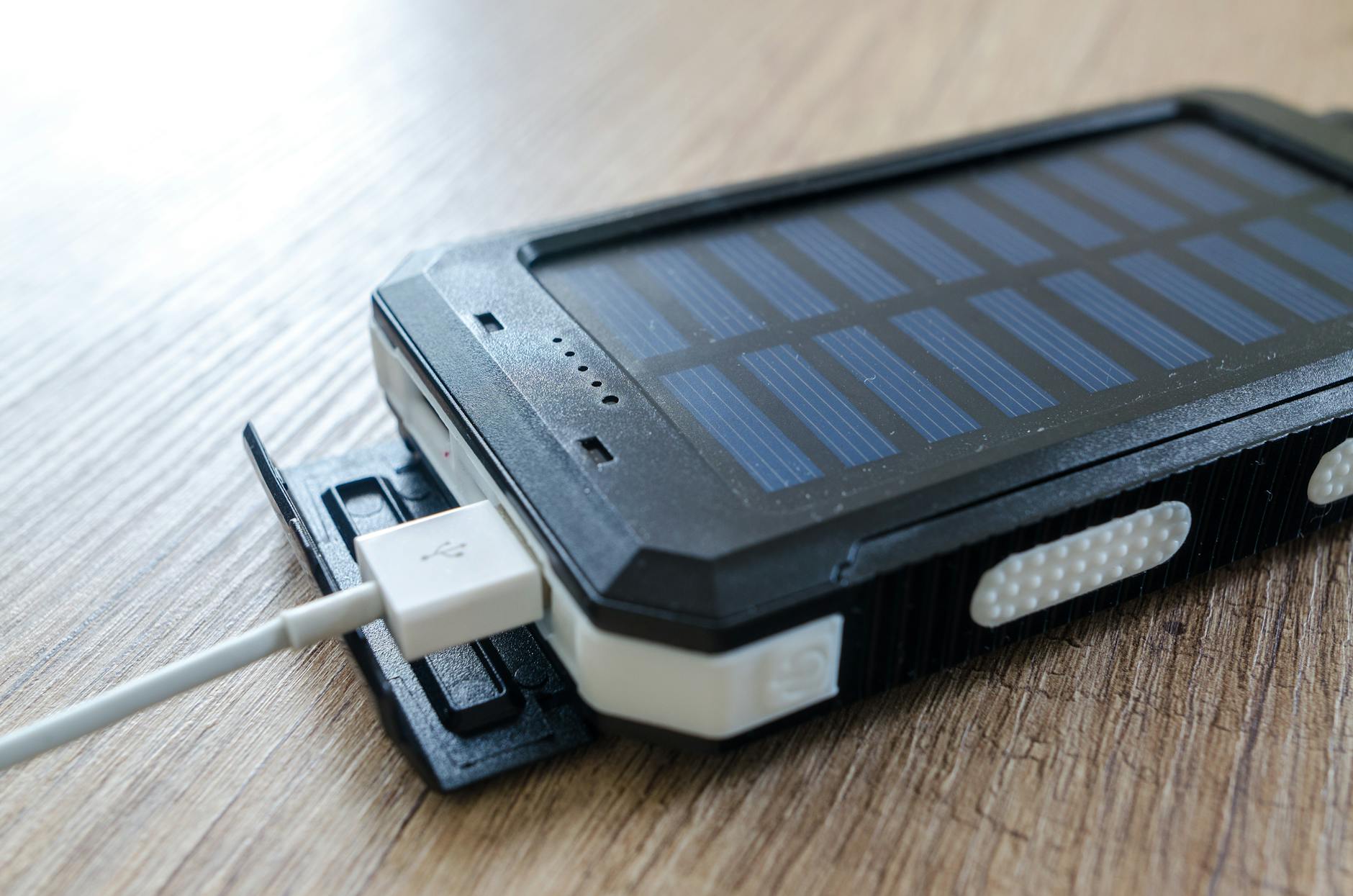
If you have ever noticed your phone getting warm during a fast charge, that warmth is telling you something worth understanding. Charging speed is not just a convenience feature. It is a trade-off between how quickly you get power and how long your battery stays healthy. Knowing that trade-off helps you get real value from your power bank, especially here in Kenya where heat and heavy daily use put extra pressure on every cell.
This article is part of our complete guide: Power Banks Best Prices.
What Fast Charging Really Does to Your Battery
Fast charging works by pushing a higher electrical current into your battery's cells in a shorter time. That increased current generates heat, and heat is the single biggest enemy of lithium battery chemistry. When temperatures rise inside a cell, the chemical reactions that store and release energy start moving faster than the cell's design can safely manage. The result is not always dramatic or immediately visible, but the stress accumulates with every cycle. Think of it like cooking on high flame: food gets done faster, but it also burns more easily if you look away. Understanding this mechanism is the first step to making smarter choices about when to use fast charging and when to leave it switched off.
Over months of repeated fast-charge cycles, this accelerated chemistry causes the battery's capacity to shrink noticeably. You might start with a power bank that holds its rated charge perfectly, but after a year of daily fast charging, it delivers noticeably less usable power per cycle. The degradation is cumulative and largely invisible until the drop becomes obvious, at which point it is already too late to reverse it. A-grade lithium cells are manufactured with tighter tolerances and purer materials, so they handle this stress far better than counterfeit or off-grade cells. Choosing a power bank built with A-grade batteries is one of the most practical ways to slow down that capacity loss from the start. It costs a little more upfront and saves you considerably more over the life of the device.
Watts and Amps: The Numbers That Matter
Understanding a few basic numbers removes a lot of confusion when you are comparing power banks on a shelf or a product listing. Watts equal volts multiplied by amps, and watts tell you the actual rate at which energy flows into your device. A 10W charge delivers energy twice as fast as a 5W charge, all else being equal, so the wattage figure is the one worth focusing on. Higher wattage sounds better on paper, but the real limit is set by your phone's charging port, not the power bank. If your phone accepts a maximum of 18W, a 65W power bank offers no extra speed, only extra cost. Knowing your phone's input ceiling before you shop is the simplest way to avoid paying for headroom you will never actually use.
Most smartphones accept between 15W and 30W as their maximum safe input, and they will refuse anything above that limit by communicating with the charger through a protocol like USB-PD or Qualcomm Quick Charge. Power banks rated at 65W or higher are genuinely useful for laptops and tablets, but they offer no meaningful speed advantage when charging a phone that tops out at 20W. What does happen when the wattage is mismatched is that the excess energy converts to heat rather than stored charge. That heat stresses both devices without producing faster results, which is the opposite of what most people are hoping for. Matching your power bank's output to your phone's actual input rating is a straightforward way to charge efficiently. It also keeps temperatures manageable, which matters especially in a warm climate like Kenya's.
How Kenya's Heat Amplifies Charging Stress
Kenya's climate adds a dimension to battery care that many product guides written for cooler markets simply skip. Nairobi's ambient temperatures regularly exceed 30 degrees Celsius, and in towns like Mombasa, Kisumu, or Garissa, midday heat pushes that figure significantly higher. Lithium batteries are designed to operate safely within a specific temperature range, and ambient heat alone already pushes them closer to the upper boundary of that range before a single watt of charging current arrives. Charging outdoors in direct sunlight, or inside a vehicle parked in the sun, compounds this effect in ways that most packaging warnings do not clearly communicate. Understanding this local reality means you need to apply battery care advice more strictly than someone using the same product in a cooler climate. The battery does not know it is rated for temperate conditions; it simply responds to whatever temperature surrounds it.
When you layer fast charging on top of an already warm operating environment, the heat inside the cell compounds quickly. A battery charging at 18W in a 35-degree room experiences conditions that a European power bank guide would associate with a much faster charge in cooler air. A-grade cells paired with multi-protection circuits manage this by monitoring temperature and automatically reducing current when sensors detect dangerous levels. The reduction in current happens invisibly, and you may just notice that charging slows slightly, which is exactly the right response from a well-built battery. Cheap, uncertified batteries lack these safety cutoffs entirely, which is why you see them swelling, leaking, or failing outright in African climates far sooner than the label suggests they should. Spending a little more on a certified power bank is not caution for its own sake; it is simply acknowledging that Kenya's conditions demand better-built hardware.
Smart Charging for Battery Longevity
The simplest strategy for making your power bank last is also the least exciting one: charge slowly whenever you can. A 5W to 10W charge rate for routine daily top-ups keeps internal temperatures low and gives the chemical reactions inside each cell time to proceed at their safest pace. Most people charge their devices overnight or while sitting at a desk, situations where waiting an extra hour carries no real cost to their day. The math over time is compelling: a battery cycled at low heat can retain a significantly higher percentage of its original capacity after 500 cycles compared with one that is fast-charged repeatedly. Forming the habit of moderate-speed charging on ordinary days compounds into significantly longer battery life over a year. Small, consistent choices about charging speed turn out to matter far more than any single dramatic charge event.
Reserve fast charging for the moments when it genuinely earns its keep, such as when your phone is at 10 percent and you have 20 minutes before leaving the house. Using a certified power bank that includes built-in voltage regulation and temperature sensors means the device itself helps enforce safe limits even when you push it. Keeping your power bank away from direct sunlight and avoiding storage in hot cars or enclosed bags reduces resting temperature and slows passive degradation even when the bank is not in use. Avoid leaving any lithium battery sitting at 100 percent charge for extended periods, since full-charge storage also stresses the cells in ways that accelerate long-term capacity loss. These habits together cost nothing and add months of reliable capacity to the battery you have already paid for. They also mean you replace the device less often, which is a straightforward financial benefit on top of the performance one.
Why Certified Power Banks Protect Against Speed Damage
Certification marks are not just branding. CE and FCC certifications require that a power bank's multi-protection circuits pass standardised safety testing before the product can legally carry those marks. That testing covers overcharge protection, over-discharge protection, short-circuit cutoff, and temperature management, the exact mechanisms that matter most when fast charging stresses a battery. A power bank that has passed these tests has demonstrated that its safety circuits actually function under load, not just under ideal laboratory conditions. The difference between a circuit that works on a test bench and one that holds up after six months of use in Kenyan heat is precisely what rigorous certification is designed to reveal. Trusting those marks means trusting a process, not just a label.
RoHS compliance adds another layer of assurance by restricting hazardous materials in the battery and its components. Under thermal stress, lower-grade materials break down and release substances that accelerate internal corrosion and capacity loss, shortening the battery's functional life well before its cycle count would suggest. A one-year warranty on an A-grade power bank is meaningful precisely because it covers the period when battery degradation from normal use becomes detectable. If a manufacturer is willing to back a product through that window, it is a reasonable indicator that the product is built to survive it. Uncertified power banks frequently carry impressive-sounding specifications on the box, but without verified safety standards, those numbers reflect marketing choices rather than tested performance. Paying a fair price for a certified product is paying for the testing behind it, which is the part that actually protects your phone and your home.
Choosing the Right Speed for Your Needs
Before deciding which power bank output speed matters to you, it is worth doing a quick calculation based on how you actually use your devices day to day. A 50000mAh power bank charged via a 5W input will take roughly 24 hours to fill completely, but for most people charging it overnight across several nights between trips, that pace is entirely practical. The capacity is what matters for extended travel or power-outage resilience, and a moderate input speed is a reasonable price to pay for that capacity. Thinking about your real usage pattern, rather than the fastest possible number on a spec sheet, almost always leads to a better buying decision. A power bank that suits your genuine habits will serve you longer and cost you less in replacements. Choosing the right tool for the job you actually have is a more reliable guide than choosing the most impressive-sounding tool available.
Peak charging speed only truly matters if you need to charge your phone while actively using it and genuinely cannot wait even two hours. For the majority of daily use cases, a moderate-speed power bank charges a typical smartphone fully within that window, which fits comfortably around meals, meetings, or a commute. Power banks with built-in cables and moderate output speeds tend to run cooler than high-wattage models, and cooler operation directly translates to a longer usable lifespan, which is worth more than an hour saved on a single charge. Every power bank purchase involves a trade-off between peak speed and the total number of healthy charge cycles you will get from the device. Choosing the right point on that curve means being honest about what you need every day, not just what sounds impressive in a product listing. When you match the tool to your actual life, you get more value from it for longer, and that is exactly what a good power bank should deliver.
Charging speed matters, but it matters in context. The right speed is the one that matches your phone's limits, suits Kenya's ambient temperatures, and comes from a certified power bank built with cells that can sustain the stress over time. If you want to explore options that balance genuine performance with durability, browse our power banks to find the right fit for your daily needs.
See everything powerbanks.africa can do for you.
Visit powerbanks.africa →