Power Bank vs Phone Battery: When You Really Need One
Power banks solve real battery problems for specific users: long commutes, field workers, remote locations with limited outlets, and degraded phone batteries. Check your battery health and screen-on time to determine actual need. Most desk-based users with moderate usage won't require external power.
See everything powerbanks.africa can do for you.
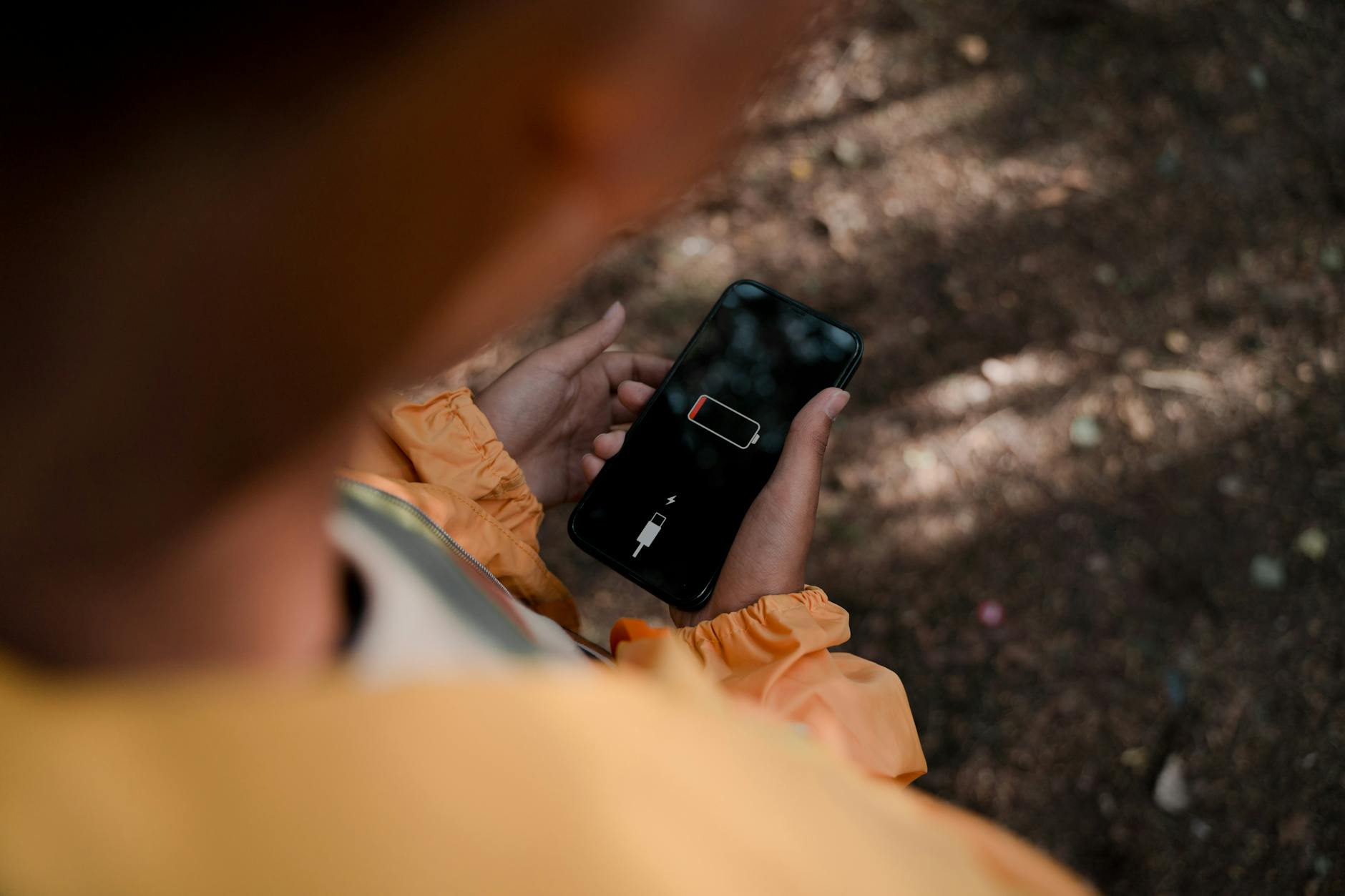
If you have ever stood outside a meeting room hunting for a wall socket, or watched your phone die mid-commute, you have probably wondered whether a power bank is a genuine necessity or just another gadget gathering dust in a drawer. The honest answer depends entirely on how you actually use your phone, not on what anyone is trying to sell you. This guide walks through the real battery math so you can make a clear decision.
This article is part of our complete guide: Power Banks Best Prices.
How Fast Your Phone Battery Actually Drains
Modern smartphones lose roughly 10 to 15 percent of their battery per hour during active use, and that figure climbs quickly when you add high screen brightness, GPS, or demanding apps like Google Maps or mobile games. Even when your phone sits in your pocket untouched, background processes are quietly working through your charge. Location services alone can account for several percentage points of drain per hour, and apps refreshing in the background compound that loss steadily. On a network that switches between 4G and 5G frequently, your phone's radio works harder to maintain a stable connection, which speeds up the drain further. A phone that lasted all day two years ago may now struggle to reach 6 p.m. on the same routine, because lithium batteries degrade with every charge cycle.
Why Battery Age Changes Everything
By the two-year mark, many phones retain only around 80 percent of their original battery capacity, which is a meaningful reduction you feel every single day. Both Android and iOS devices show a battery health percentage buried in the settings menu, and checking that number takes under a minute. A phone sitting at 78 percent health with heavy daily use is effectively a different device from the one you bought, even if nothing else has changed. Heat is the fastest accelerator of this degradation: leaving your phone on a car dashboard or charging it under a pillow shortens its useful life noticeably. Understanding your battery's current health is the first honest step toward deciding whether you need external power at all.
Daily Scenarios Where You Actually Need Extra Power
The clearest case for carrying a power bank is a long commute or full travel day that keeps you away from a charger for six hours or more. Matatu rides from Thika Road into the CBD, connecting flights through JKIA, or a day trip to Mombasa all fit that description precisely. Delivery riders, field sales agents, and customer service staff whose work lives on their phones face a more persistent version of the same problem, because their screen-on time is genuinely high throughout the working day. If your job takes you into areas where electricity supply is inconsistent, whether that is a construction site, a rural county office, or an outdoor market, the nearest wall socket may simply not exist at a convenient time. For all of these people, running low on battery is not an occasional nuisance but a recurring obstacle that costs them time and sometimes money.
Remote and Outdoor Workers Face a Different Challenge
Remote workers who take calls and share files from a café, a co-working space, or even a park also run into situations where outlets are occupied or unavailable. A busy Westlands café on a Monday morning may have every socket taken well before 9 a.m., leaving you competing with a laptop user for the one free plug near the window. Field researchers, journalists covering stories away from a newsroom, and medical community health workers doing home visits all rely on their phones as their primary data tool, which means a dead battery is a stopped workday. In those environments, carrying a charged power bank is less about convenience and more about professional reliability. Treating portable power as a work tool rather than an accessory shifts the decision entirely.
When Your Phone Battery Is Actually Enough
Not every lifestyle creates a battery problem worth solving with extra hardware. If you work at a desk with a charger nearby for most of the day, your phone is probably topped up more often than it is depleted. Short daily routines that move between home, a car charger, and an office rarely leave you stranded for long enough to exhaust even a modest phone battery. Light to moderate use, meaning calls, WhatsApp messages, and occasional social media browsing without hours of video streaming, places relatively little demand on a battery compared to navigation or gaming. Newer flagship phones from Samsung, Apple, and Xiaomi ship with batteries large enough to handle a full working day under moderate load without any supplemental power.
The Honest Test for Low-Use Lifestyles
If you genuinely cannot remember the last time your phone died before bedtime, that is useful data pointing to the fact that your current setup already works. Buying a power bank in that situation means spending money on a problem you do not actually have. A better approach is to spend one week paying attention to where your battery level sits at the end of your longest stretch from a charger, whether that is lunchtime, the commute home, or after an evening event. If the answer is consistently above 30 percent, your phone battery is already doing its job. Keep that number in mind because it will become relevant again if your routine changes significantly, such as starting a new job with more fieldwork or travelling more frequently.
How to Measure Your Real Battery Needs
Rather than guessing, spend one week checking the battery section of your phone's settings, where both Android and iOS show your average daily screen-on time and the apps consuming the most power. That single number tells you more about your actual needs than any specification sheet. Separately, note the time of your last morning charge and the time your phone either dies or drops to a level that makes you anxious, because that gap is your real endurance window. If that window is consistently shorter than your longest stretch away from a charger, you have a genuine gap to fill. Also pay attention to the emotional signal: if you regularly feel worried about battery level by early afternoon, that stress is a real cost even if you technically make it through the day.
Turning Your Own Data Into a Decision
After your observation week, you should have a clear picture of two numbers: your average screen-on time and your longest daily stretch without access to a charger. If the first number regularly approaches or exceeds the hours your battery can sustain, a power bank directly fills that gap. If the gap between those two numbers is small or nonexistent, the purchase is premature. Add a power bank to your kit only when the data from your own week shows you regularly face six or more hours away from charging, because that threshold is where a portable battery genuinely earns its place. Making the decision with your own usage figures rather than a general recommendation means you avoid both over-spending and under-preparing.
Choosing the Right Capacity When You Do Buy One
Once you have confirmed that a power bank solves a real problem, capacity matching matters more than most buyers realise. A 20000mAh unit can fully recharge most smartphones two to three times and slips comfortably into a backpack or handbag, making it a practical daily companion for commuters and remote workers. A 50000mAh power bank covers four to six full phone charges and suits anyone managing multiple devices, long trips, or stretches of several days in areas with unreliable electricity. The gap between those two options is not trivial: a 50000mAh unit is physically larger and heavier, which matters if you are already carrying a laptop bag or walking significant distances during your day. Choosing the wrong capacity in either direction means either running out of power early or lugging unnecessary weight around every day.
Features That Make Daily Use Practical
Built-in cable models are genuinely convenient for daily commuters because they eliminate the frustration of searching through your bag for a loose cable, though it is worth checking verified buyer reviews to confirm the cable connector holds up over months of repeated use. LED light models serve double duty by adding a dependable torch for load-shedding evenings or early morning starts without requiring you to carry a separate flashlight. Multi-port units let you charge a phone and a wireless earbud case simultaneously, which is useful if you rely on earbuds for calls during a commute. Certification matters too: A-grade battery cells paired with CE, FCC, and RoHS certification and multi-protection circuitry guard against overheating and overcharging, which are genuine safety concerns with uncertified budget units. You can browse the specific capacities and features available, including 50000mAh models with built-in cables and LED lights, on our product pages to match your actual use case to the right unit.
Making Your Decision Right Now
If a typical day ends with your phone still above 30 percent battery, it is reasonable to skip the purchase until your routine changes in a meaningful way. If you are regularly dipping below 20 percent by early evening and occasionally scrambling for a socket, a power bank solves a documented, recurring problem and pays for itself quickly in reduced stress. Frequent travellers on routes like Nairobi to Nakuru or Nairobi to Kisumu, and people who work outdoors, will find that a higher-capacity unit is not an indulgence but a practical work tool. Whichever capacity you choose, buying once with quality internals and a one-year warranty means you avoid the cycle of replacing a cheap unit every twelve months. A reliable power bank bought thoughtfully costs less over three years than two or three budget replacements.
One Final Check Before You Buy
Before completing a purchase, confirm that the unit's output wattage matches your phone's fast-charging standard, because buying a power bank that charges your phone slowly can be genuinely frustrating when you have limited time to top up. Also check the input wattage, since a unit that recharges itself in two hours is far more useful than one that takes eight hours to refill overnight. Reading the product specifications carefully for both figures takes two minutes and saves a lot of disappointment. If you are buying for a team, such as equipping delivery riders or a field sales team, standardising on a single model simplifies cable compatibility and replacement. Getting those details right before purchase means the power bank you choose actually performs the way you expect it to.
The decision is simpler than it feels once you look at your own battery data for a week. Know your screen-on time, know your longest daily stretch from a charger, and let those two numbers guide you rather than marketing claims or a vague sense that more capacity is always better.
See everything powerbanks.africa can do for you.
Visit powerbanks.africa →